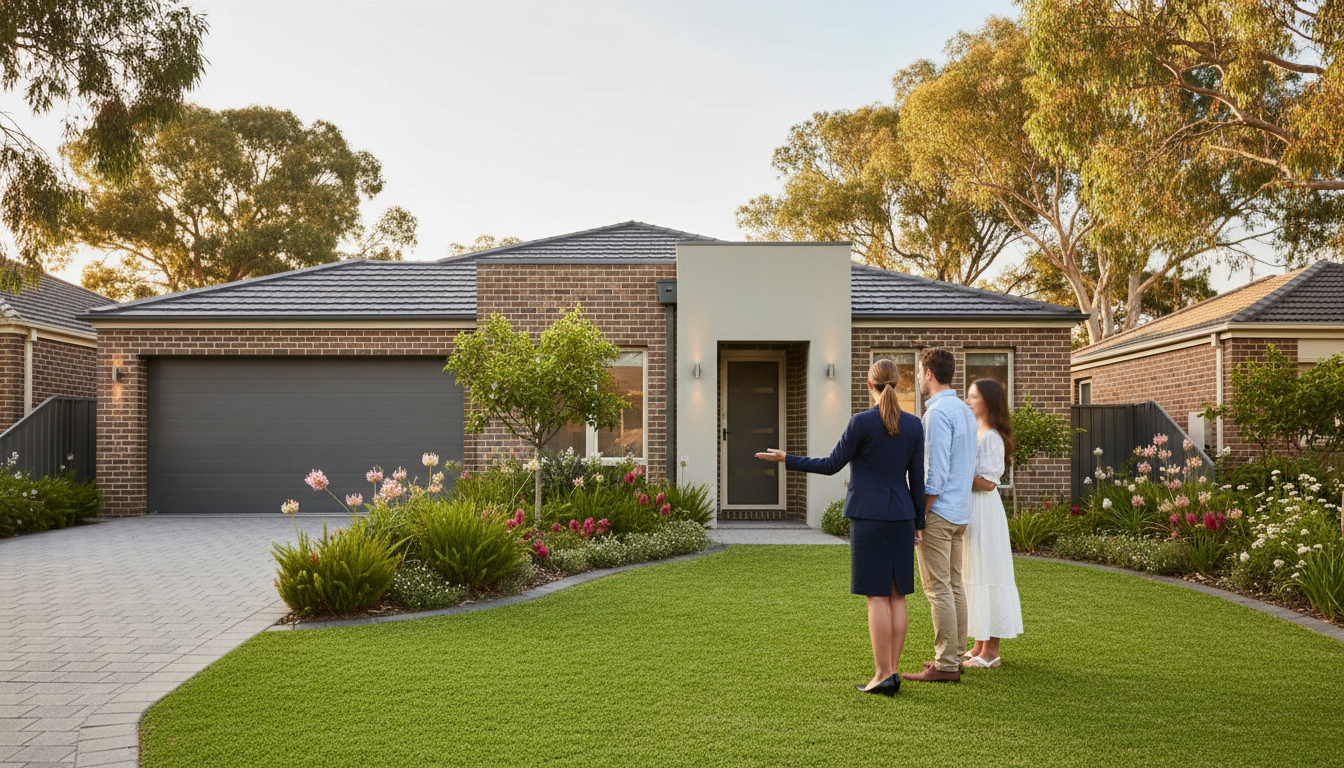
The Bankstown property market has demonstrated resilience and steady growth throughout 2026, driven by infrastructure investment, strong buyer demand from families and investors, and the suburb’s position as a transport and commercial hub across South West Sydney. For vendors considering sale timing, buyers assessing affordability, and investors evaluating rental yield and capital growth potential, understanding current market conditions across the Canterbury-Bankstown LGA is essential to making informed property decisions.
According to CoreLogic, Bankstown’s median house price increased by 6.2% over the 12 months to March 2026, outperforming the Greater Sydney average of 4.8%. This growth reflects sustained buyer interest in a suburb offering relative affordability, established infrastructure, and proximity to employment centres across Canterbury-Bankstown and the broader South West Sydney region. Domain data shows Bankstown’s auction clearance rate averaged 68% in Q1 2026, reflecting strong buyer confidence and competitive bidding across the Canterbury-Bankstown LGA.
At Class Realty, our team led by Fadi Hajjar—who has achieved over $500 million in Sydney real estate sales—works daily with vendors, buyers, and investors navigating the Bankstown property market. This update draws on verified market data from CoreLogic, Domain, SQM Research, and the NSW Valuer General to provide practical guidance for property decisions in 2026.
Bankstown Property Market Overview: 2026 Performance
The Bankstown property market entered 2026 with momentum carried from late 2025, supported by improved buyer sentiment following interest rate stabilisation and ongoing infrastructure upgrades including the Bankstown Airport precinct redevelopment and enhanced M5 motorway access. According to the NSW Valuer General, land values in Bankstown rose by 8% in the 2025 valuation cycle, driven by infrastructure upgrades including the Bankstown Airport precinct and improved transport links.
SQM Research reports rental vacancy rates in Bankstown remained below 2% throughout 2025 and early 2026, indicating sustained tenant demand and favourable conditions for investors. The Australian Bureau of Statistics (ABS) Census data reveals that 42% of Bankstown households are renting, higher than the NSW average, supporting long-term rental market stability across suburbs including Bankstown, Yagoona, Greenacre, and Bass Hill.
Market Snapshot
- —According to CoreLogic, Bankstown’s median house price increased by 6.2% over the 12 months to March 2026, outperforming Greater Sydney’s 4.8% growth
- —Domain data shows Bankstown’s auction clearance rate averaged 68% in Q1 2026, reflecting strong buyer confidence
- —SQM Research reports rental vacancy rates in Bankstown remained below 2% throughout 2025 and early 2026
- —The NSW Valuer General recorded an 8% increase in Bankstown land values in the 2025 valuation cycle
Median House and Unit Prices in Bankstown
According to Domain and CoreLogic data, Bankstown’s median house price in early 2026 ranges between $1.15 million and $1.25 million, reflecting steady capital growth driven by infrastructure investment and strong buyer demand from families and investors. This positions Bankstown as a relatively affordable option compared to inner-west suburbs such as Canterbury and Campsie, where median house prices exceed $1.4 million.
Unit medians sit between $580,000 and $650,000, offering accessible entry points for first-home buyers and investors seeking positive cash flow properties. Older-style units in walk-up blocks near Bankstown railway station typically achieve rental yields between 4.2% and 4.5%, while newer apartments with secure parking and lift access command slightly lower yields but stronger capital growth prospects.
Auction Clearance Rates and Market Confidence
Domain data shows Bankstown’s auction clearance rate averaged 68% in Q1 2026, reflecting strong buyer confidence and competitive bidding across the Canterbury-Bankstown LGA. This clearance rate indicates a balanced market where well-presented properties with realistic reserve prices consistently attract multiple bidders, while overpriced or poorly marketed listings may pass in or sell post-auction at negotiated prices.
The auction process remains a popular sale method for family homes in Bankstown, Yagoona, and Revesby, particularly for properties with broad buyer appeal including renovated brick homes on level blocks and dual-occupancy development sites. Under the Property and Stock Agents Act 2002 (NSW), agents must disclose the number of registered bidders and provide a copy of the contract for sale at least one business day before auction, ensuring transparency for all participants.
Buyer Demand: Who’s Purchasing in Bankstown?
Bankstown’s buyer demographic in 2026 reflects the suburb’s cultural diversity and accessibility for families, first-home buyers, and investors. According to ABS Census data, Bankstown’s population includes significant communities from Middle Eastern, South Asian, and East Asian backgrounds, with many buyers seeking proximity to cultural amenities, places of worship, and established community networks across the Canterbury-Bankstown LGA.
First-home buyers represent a growing segment of Bankstown purchasers, attracted by unit prices under $650,000 and eligibility for NSW Government stamp duty concessions on properties valued under $800,000. Investors—both local and interstate—continue to target Bankstown for its rental yields typically between 3.8% and 4.5% according to SQM Research, supported by proximity to Bankstown Airport redevelopment, the M5 motorway, and Bankstown railway station.
Upgraders from surrounding suburbs including Punchbowl, Lakemba, and Wiley Park seek larger family homes with multiple living areas and off-street parking, often targeting properties within the Bankstown Public School and Bankstown Girls High School catchment areas. Developers and builders actively pursue sites with dual-occupancy or townhouse development potential, particularly blocks exceeding 550 square metres with favourable R3 Medium Density Residential zoning under Canterbury-Bankstown Council planning controls.
Property Types in Demand Across Canterbury-Bankstown
Buyer preferences across the Bankstown property market in 2026 favour properties offering functional layouts, secure parking, and proximity to transport and retail amenities. Renovated brick homes with three or four bedrooms, updated kitchens and bathrooms, and level access to backyards consistently attract competitive bidding from families seeking move-in-ready properties.
Two-bedroom units in well-maintained strata complexes near Bankstown railway station appeal to first-home buyers and investors, particularly properties with secure basement parking and low strata levies under $1,000 per quarter. Townhouses and villas in newer developments across Yagoona, Greenacre, and Bass Hill offer low-maintenance alternatives to traditional houses, attracting downsizers and young families seeking modern finishes without the upkeep of older properties.
Development sites with dual-occupancy or multi-dwelling potential remain highly sought after, with builders and investors targeting blocks exceeding 550 square metres in R3 Medium Density Residential zones. These properties often sell above median house prices due to their income-generating or capital growth potential. For examples of current Bankstown listings, Class Realty maintains an updated portfolio reflecting active buyer preferences across the Canterbury-Bankstown LGA.
Investment Opportunities in Bankstown: Rental Yields and Capital Growth
Bankstown offers strong rental yields typically between 3.8% and 4.5% according to SQM Research, supported by proximity to Bankstown Airport redevelopment, the M5 motorway, and Bankstown railway station. The suburb attracts consistent tenant demand from families, students, and essential workers across South West Sydney, with rental vacancy rates remaining below 2% throughout 2025 and early 2026.
Understanding rental yield calculations is essential for investors evaluating Canterbury-Bankstown properties. Gross rental yield is calculated by dividing annual rental income by the property purchase price and multiplying by 100. For example, a unit purchased for $600,000 generating $500 per week in rent produces a gross rental yield of approximately 4.3%. Net rental yield accounts for ongoing costs including council rates, strata levies, property management fees, and maintenance, typically reducing returns by 1% to 1.5%.
Capital growth prospects in Bankstown remain supported by infrastructure investment including the Bankstown Airport precinct redevelopment, which is expected to create thousands of jobs and drive demand for residential property across surrounding suburbs. According to the NSW Valuer General, land values in Bankstown rose by 8% in the 2025 valuation cycle, outpacing many established Sydney suburbs and indicating sustained buyer confidence in the area’s long-term growth trajectory.
- ✓
Calculate rental yield and compare to Canterbury-Bankstown averages if purchasing as an investment - ✓
Review median price trends for your property type using CoreLogic or Domain data to set realistic expectations - ✓
Arrange building and pest inspections before exchange, as required under standard Contract for Sale of Land terms - ✓
Budget for stamp duty, legal fees, and strata levies (if applicable) using Revenue NSW calculators and conveyancer estimates
How Bankstown Compares to Greater Sydney
Bankstown’s property market performance in 2026 demonstrates the suburb’s competitive position within Greater Sydney, offering relative affordability while maintaining strong capital growth and rental yield metrics. According to CoreLogic, Bankstown’s median house price increased by 6.2% over the 12 months to March 2026, outperforming the Greater Sydney average of 4.8%, while median house prices remain approximately $200,000 below the metropolitan median of $1.42 million.
This affordability gap attracts buyers priced out of inner-west suburbs including Canterbury, Campsie, and Ashfield, where median house prices exceed $1.4 million and unit prices approach $800,000. Bankstown’s transport connectivity—with direct train services to Sydney CBD in under 30 minutes and M5 motorway access to Sydney Airport and the eastern suburbs—supports its appeal for commuters and investors targeting tenants working across multiple employment centres.
For context on broader Sydney property trends, metropolitan markets have experienced varied performance across 2026, with infrastructure-rich suburbs in South West Sydney including Bankstown, Liverpool, and Parramatta demonstrating stronger growth than established eastern suburbs where price ceilings and limited stock constrain capital appreciation.
What Buyers Should Know in 2026
Buyers entering the Bankstown property market in 2026 should prioritise pre-purchase due diligence, finance pre-approval, and understanding their legal obligations under NSW property law. Under the Conveyancing Act 1919 (NSW), buyers who purchase by private treaty have a five-business-day cooling-off period, during which they may withdraw from the contract with a 0.25% penalty of the purchase price. Properties purchased at auction have no cooling-off period, making pre-auction due diligence essential.
All buyers should engage a licensed conveyancer or solicitor to review the contract for sale, vendor disclosure statement, and any special conditions before exchange. For strata properties, buyers should review the strata inspection report, financial statements, and minutes of recent owners corporation meetings to identify any planned special levies or building defects that may affect property value or ongoing costs.
First-home buyers should investigate eligibility for NSW Government stamp duty concessions and exemptions, which apply to properties valued under $800,000 and are subject to income and residency requirements. For comprehensive guidance on buying property in Bankstown, Class Realty provides detailed resources covering finance, inspections, and settlement processes specific to the Canterbury-Bankstown LGA.
- 1
Obtain Finance Pre-ApprovalSecure conditional loan approval from a lender before attending inspections or making offers, confirming your borrowing capacity and demonstrating genuine buyer status to agents and vendors.
- 2
Review Contract and Vendor DisclosureEngage a licensed conveyancer or solicitor to review the contract for sale and vendor disclosure statement, identifying any special conditions, easements, or restrictions affecting the property under the Conveyancing Act 1919 (NSW).
- 3
Arrange Building and Pest InspectionsCommission independent building and pest inspections before exchange to identify structural defects, termite damage, or non-compliant building work that may affect property value or require costly remediation.
- 4
Exchange Contracts and Pay DepositOnce satisfied with due diligence, exchange signed contracts with the vendor and pay the deposit (typically 10% of purchase price) to the agent’s trust account or conveyancer, creating a legally binding agreement under NSW law.
- 5
Complete SettlementSettlement typically occurs 30 to 60 days after exchange, during which your lender releases funds, your conveyancer lodges transfer documents with NSW Land Registry Services, and you receive keys to your new Bankstown property.
How to Position Your Property for Sale in 2026
Vendors seeking to maximise sale outcomes in the Bankstown property market should prioritise presentation, accurate pricing, and strategic marketing aligned with current buyer preferences. According to Domain data, well-presented properties with professional photography and comprehensive marketing campaigns achieve sale prices 5% to 8% above comparable properties with minimal marketing investment.
Obtaining a professional market appraisal from a licensed agent familiar with Canterbury-Bankstown is essential to understanding current value and setting a realistic reserve price or asking price. At Class Realty, Fadi Hajjar and the team provide obligation-free appraisals drawing on over $500 million in Sydney real estate sales and detailed knowledge of recent comparable sales across Bankstown, Yagoona, Greenacre, and surrounding suburbs.
Under the Property and Stock Agents Act 2002 (NSW), agents must provide vendors with a written agency agreement specifying commission rates, marketing costs, and the agent’s obligations before commencing any marketing activity. Vendors should clarify whether marketing costs are payable upfront or deducted from sale proceeds, and confirm the agent holds a valid licence or certificate of registration verifiable through NSW Fair Trading’s public register.
- ✓
Obtain a market appraisal from a licensed agent familiar with Canterbury-Bankstown to understand current value - ✓
Complete minor repairs and presentation improvements including fresh paint, garden maintenance, and decluttering to maximise buyer appeal - ✓
Verify your agent holds a valid licence under the Property and Stock Agents Act 2002 (NSW) via NSW Fair Trading - ✓
Prepare a vendor disclosure statement and contract for sale with your conveyancer or solicitor before marketing commences - ✓
Check auction clearance rates and days on market to gauge buyer competition and optimal sale timing
Frequently Asked Questions About the Bankstown Property Market
What is the median house price in Bankstown in 2026?
According to Domain and CoreLogic data, Bankstown’s median house price in early 2026 ranges between $1.15 million and $1.25 million, reflecting steady capital growth driven by infrastructure investment and strong buyer demand from families and investors. Unit medians sit between $580,000 and $650,000, offering accessible entry points for first-home buyers.
Is Bankstown a good area to invest in property?
Yes. Bankstown offers strong rental yields typically between 3.8% and 4.5% according to SQM Research, supported by proximity to Bankstown Airport redevelopment, the M5 motorway, and Bankstown railway station. The suburb attracts consistent tenant demand from families, students, and essential workers across South West Sydney.
What are the cooling-off rights for buyers in Bankstown?
Under the Conveyancing Act 1919 (NSW), buyers who purchase by private treaty have a five-business-day cooling-off period, during which they may withdraw from the contract with a 0.25% penalty of the purchase price. Properties purchased at auction have no cooling-off period, making pre-auction due diligence essential.
How do I find a licensed real estate agent in Bankstown?
All agents must hold a licence or certificate of registration under the Property and Stock Agents Act 2002 (NSW), which you can verify through NSW Fair Trading’s public register. Class Realty’s agents, including Fadi Hajjar, are fully licensed and members of the Real Estate Institute of NSW (REINSW), ensuring compliance and professional standards.
What stamp duty do I pay on a Bankstown property?
Stamp duty in NSW is calculated on a sliding scale administered by Revenue NSW. For a $1.2 million Bankstown house, stamp duty is approximately $49,000 for owner-occupiers. First-home buyers may qualify for concessions or exemptions on properties under $800,000, subject to eligibility criteria under NSW Government schemes.
This article is general information only and does not constitute legal, financial, or real estate advice. Property decisions involve significant financial and legal considerations. Always consult a licensed conveyancer, solicitor, or financial advisor before making any property-related decisions.
For an obligation-free market appraisal backed by genuine local knowledge and over $500 million in Sydney real estate sales, contact Fadi Hajjar and the Class Realty team at our Bankstown office on 6/19 Restwell Street or visit classrealty.com.au to explore current listings across Canterbury-Bankstown.
Fadi Hajjar and the Class Realty team. Over $500M in Sydney real estate sold. Offices in Bankstown and Martin Place, Sydney.